

Build the template once
Every proposal used to start as a copy of the last one. Now every document starts from the same template, and I only read what actually changes.
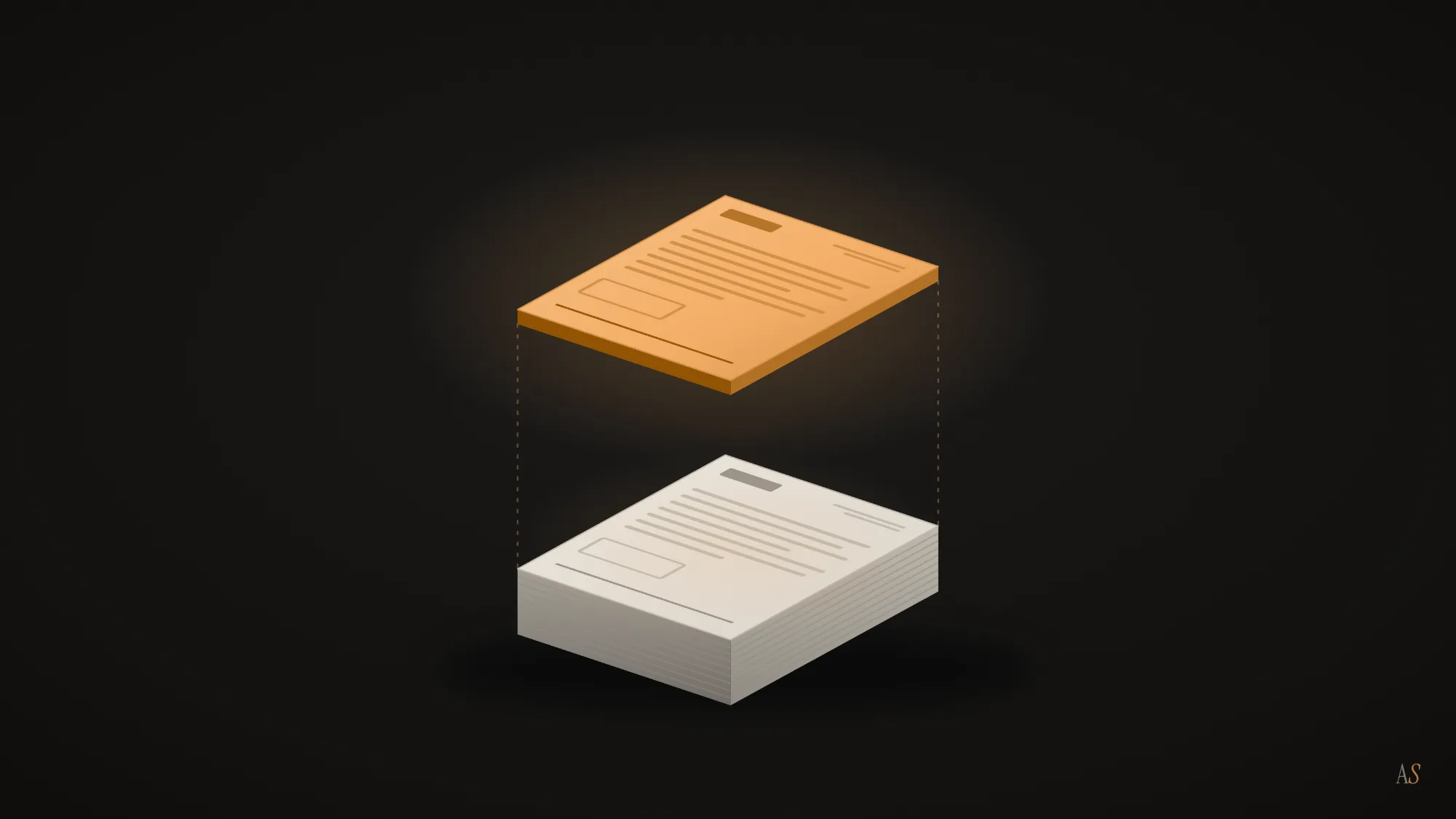
Every proposal we sent used to start as a copy of the last one. That meant old client names in footers, mismatched fonts and payment terms retyped by hand. We replaced the copying with a small document design system, and now every document starts from the same place.
1. Start from the one real artifact
We had no brand book, only a one-page letterhead PDF and a few logo files. So the letterhead became the source of truth: its blue, its footer rule, its margins and its address block. Anything it did not define, we chose once and wrote down.
2. Decide what every page shares
Six templates came out of it: letterhead, functional requirements, proposal, estimate, business requirements and technical specification. All are A4 and print cleanly. Each carries the same frame.
Header. The logo, with the company address in grey. Document numbers sit in the body, labelled "Doc No", so the header never changes.
Footer. A blue rule, contact details on the left, the page number on the right.
Seal and signature. One approved seal and one signature, stored once and reused. The old seal was deleted so nobody picks it.
3. Ask only for what changes
A template should ask questions, not wait for edits. The proposal asks for the project name, client, cost, date, doc number, timeline, tech stack and warranty period. Payment terms stay fixed at 40/50/10 and validity at 15 days, because those are policy.
4. Let the template do the arithmetic
The estimate takes line items and a GST setting and calculates the totals itself. Nobody adds up a column by hand. A wrong total costs more trust than a late one.
5. Notice what it gives back
For me, the gain is attention. I used to read every proposal line by line before signing, hunting for stale names and wrong numbers. Now I read the scope and the price, because the frame is already right. Clients see the same company on every page, whoever prepared it.
Note: The font is a stand-in. No brand font files existed, so we used Poppins, the closest match to the wordmark. A vector master of the logo is still on the list.
The wrap-up
None of this is glamorous. It is making each decision once, so nobody makes it again under a deadline.
Decide once. Then stop deciding.